
Strategy Lab · Complete Guide
step by step

Many beginner traders think success in the market comes only from correctly predicting price direction. But the truth is: long-term profitability is achieved not through random predictions, but by following a systematic, tested system called a “profitable trading strategy.”
A good strategy, like a compass, guides you through the turbulent ocean of markets. It tells you when to enter, when to exit, how much capital to risk, and how to control your emotions (greed and fear). Without a strategy, you are a boat without a compass in a storm.
In this comprehensive step-by-step guide, we will show you exactly how to build a profitable trading strategy from scratch, test it using tools like Algotradium, and finally deploy it confidently in real markets.
Before you even look at your first indicator, you need to know yourself and your goals. A strategy that works excellently for another trader may be disastrous for you.
Very short-term trades (seconds to minutes) for small, frequent profits. Requires extremely high focus and precise timing.
Opening and closing all positions within a single day. A day trader has no open positions at the end of the day.
Holding positions for several days to weeks to profit from price “swings” or waves. This style is more suitable for many part-time traders.
Holding positions for weeks, months, or even years. This style relies more on fundamental analysis.
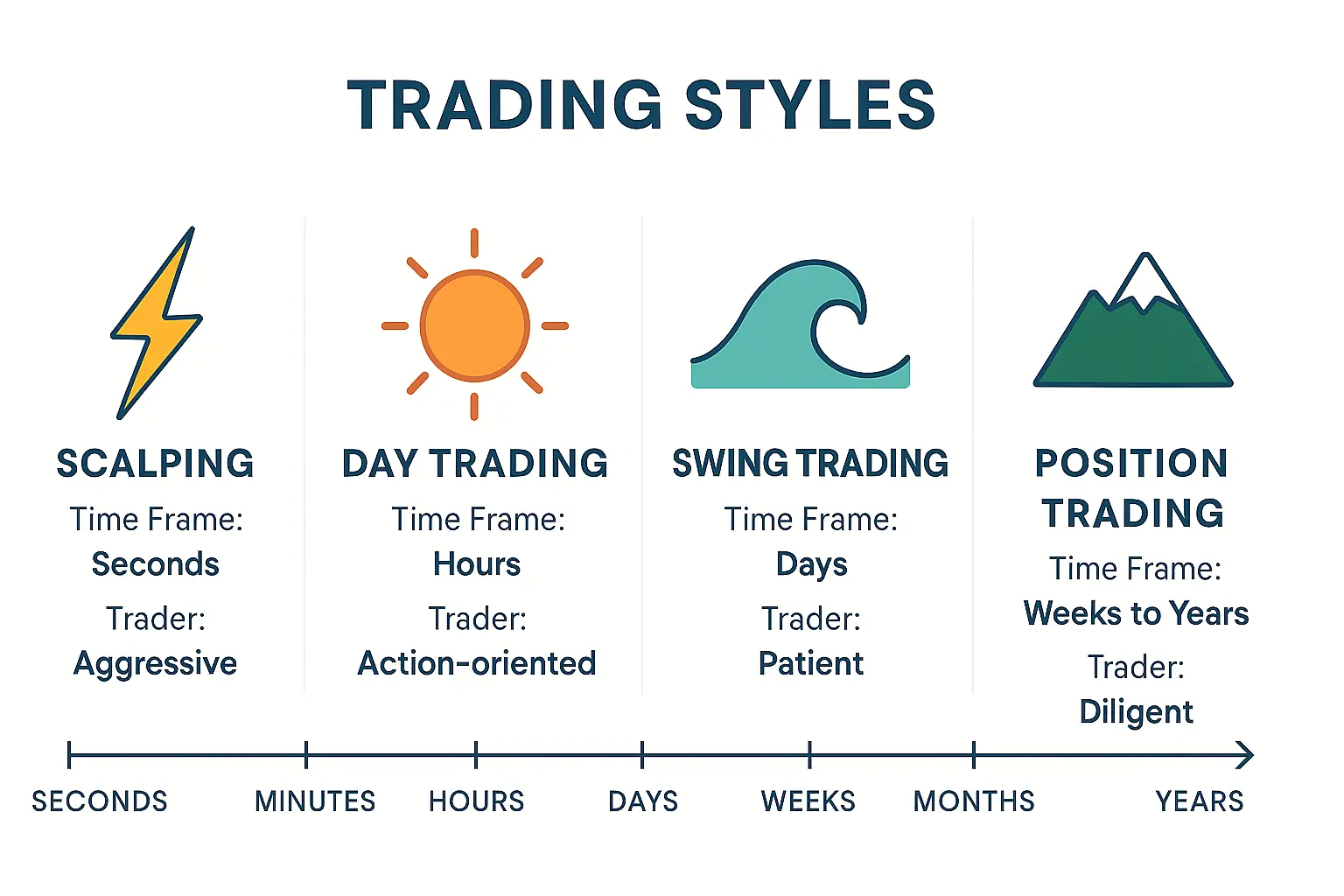
Do you want short-term profits or long-term capital growth? Your answer will directly impact choosing the right timeframe for your trading.
Each market has its own rules and psychology. A strategy that works for volatile cryptocurrencies may not be suitable for Forex market, which moves faster.
Markets with very high volatility and 24/7 activity. Technical analysis is very powerful in these markets.
Currency pair market. Extremely high liquidity and ability to trade in different sessions (Asia, London, New York).
Often considered a “safe haven” during times of economic instability and are influenced by inflation and dollar interest rates.
To start, focus on one or two markets. “Jack of all trades, master of none” is a dangerous saying in trading.
This is the most operational part. Here you must precisely and unambiguously specify under what conditions you enter a trade and when you exit. Stick to your rules and under no circumstances let fear or greed cause you to act outside your defined framework. Many successful traders have overcome this psychological trait by using algorithmic methods and automating their trade execution through coding or trading bots. This is why algorithmic trading is becoming increasingly popular among traders, and platforms dedicated to this type of trader are growing. Platforms like QuantConnect, etc., where traders can define their trading strategy and then backtest across different timeframes and assets.
The Algotradium platform provides similar capabilities — and in most cases far beyond those platforms — for users at a much lower cost. If you are not a professional coder and your trading strategy can be defined using indicators or price conditions, you can define your strategy in a very simple user interface. Then, by activating a signal bot from this strategy, you will receive a notification whenever your specified entry or exit conditions occur, and you can execute your buy or sell trade. Thus, you no longer need to sit constantly in front of the system checking entry and exit conditions, and fear and greed will have less impact on your trades.
On the other hand, if you are a professional programmer, you can use a very simplified coding environment to define your trading strategy, backtest it, and receive entry/exit signals on your mobile phone.
To determine the entry point, a combination of technical analysis and indicators is usually used.
“The trend is your friend.” How to identify the trend?
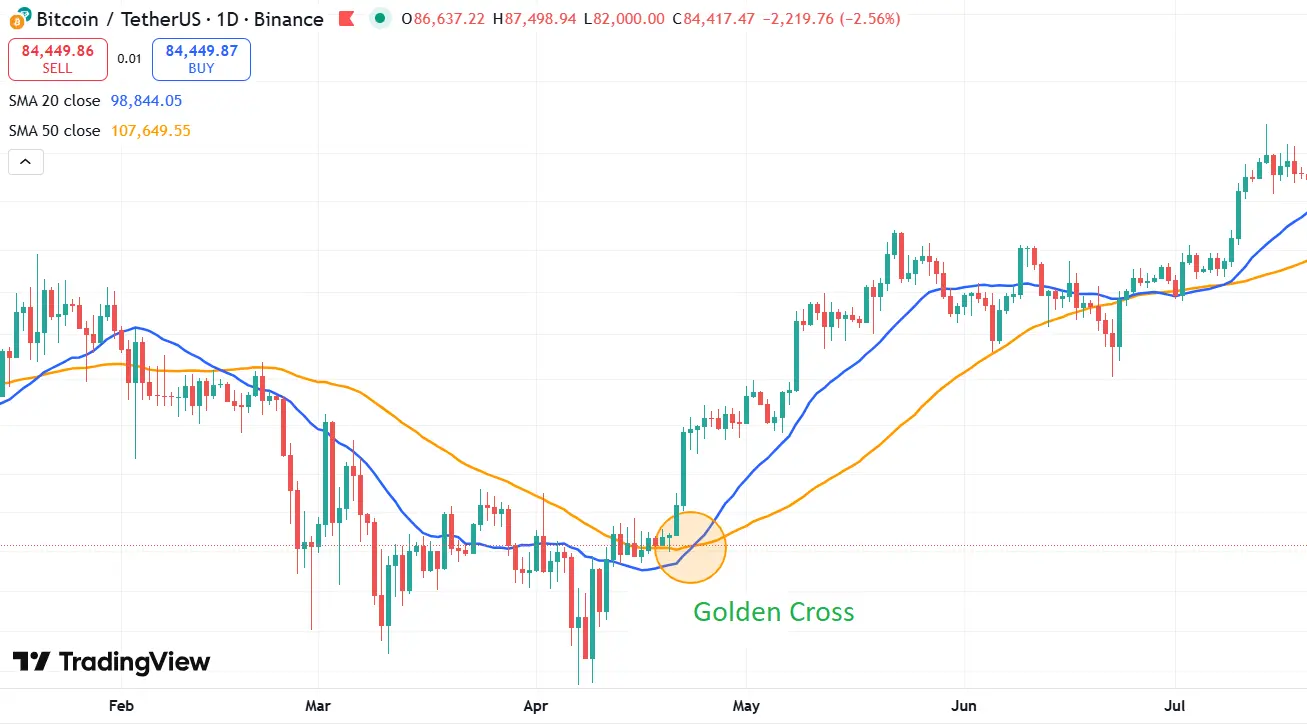
The simplest method: using Moving Averages. For example, when a short-term moving average (e.g., 20-day) crosses above a long-term moving average (e.g., 50-day), it signals the start of a potential uptrend (known as a Golden Cross). In Algotradium, you can easily define these indicator-based conditions (like moving average crossovers) in your trading strategy and test the strategy on historical data across different markets.
This indicator oscillates between 0 and 100. Values below 30 typically indicate “oversold” (buying opportunity), while values above 70 indicate “overbought” (caution for selling). But be careful! In strong trends, RSI can remain in overbought territory for a long time.
This indicator shows both trend direction and momentum. When the MACD line crosses above the signal line from below, it can be a potential buy signal.
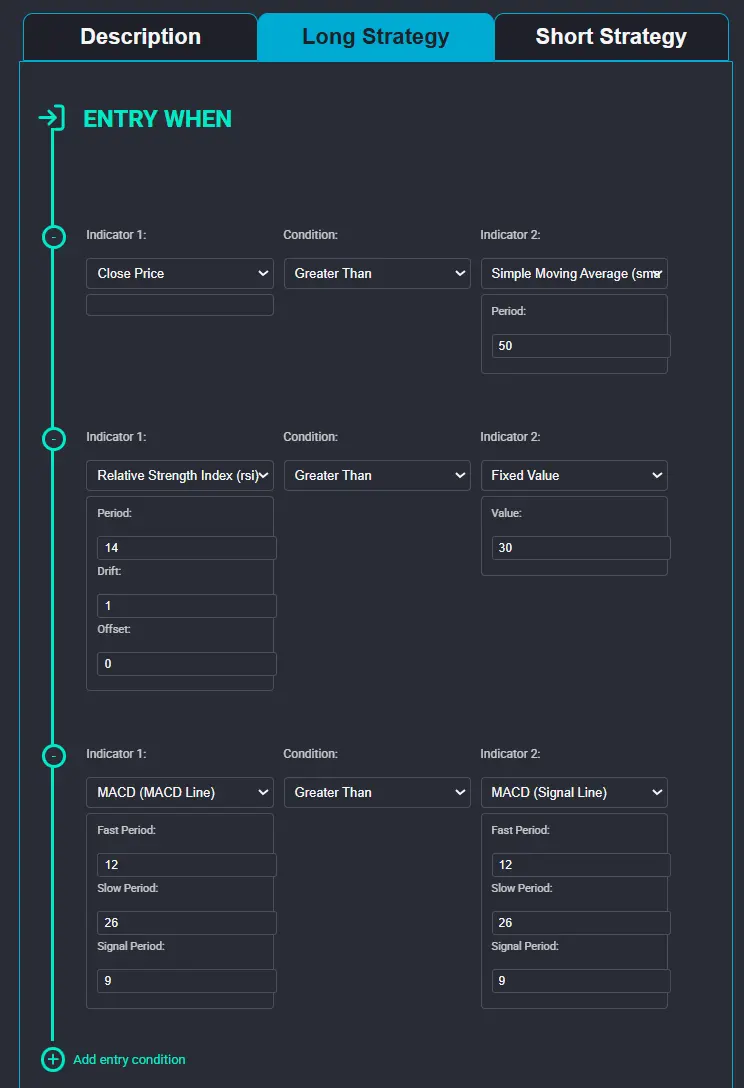
“I buy a stock on the S&P500 when:
Note that this is a simple example. In Algotradium, you can define these conditions as a list of criteria (for example, in the “Indicator Strategy Builder” section) and then add a signal bot to automatically send signals to you.
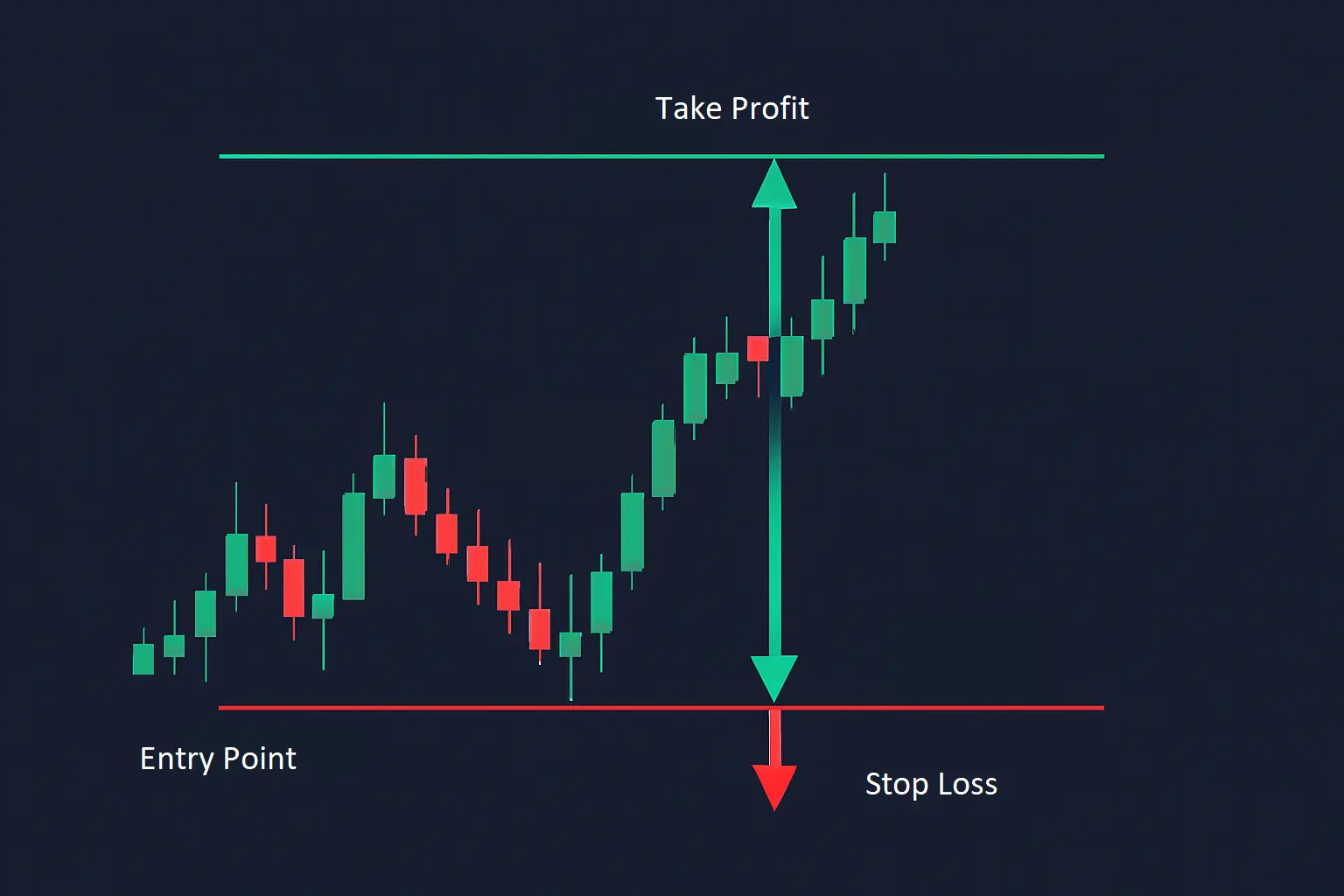
This part is more important than entry rules. A professional trader knows how to keep losses small and profits large. Always define a stop loss for your trades. Never leave a trading strategy without a defined stop loss!
Purchase price: the price at which the trade is executed
Exit zone with controlled loss: usually set relative to the entry point. For advanced strategies, you can define stop loss based on support/resistance levels and adjust during the trade.
Exit zone with planned profit: take profit should generally be larger than stop loss so you remain profitable over the long term. Take profit can also have two or three levels where you close part of the position at each level, allowing that profit to compensate for potential losses on other parts of the trade.
Risk management is what ensures you stay in the game after a series of consecutive losses.
Never risk more than 1% to 2% of your total capital on a single trade. If your account has 100 million Tomans, your maximum loss per trade should be 1 to 2 million Tomans.
Don’t concentrate all your capital in one stock or one currency. This reduces “unexpected storm” risk.
Position Size = (Capital × Risk % per trade) / (Entry Price – Stop Loss Price)
Fortunately, in platforms like Algotradium, you can embed risk management rules as stop loss and take profit in your “trading strategies” to be executed automatically.
Would you mass-produce a car without safety testing? Never. Your trading strategy must also be extensively tested on historical data before being deployed in real markets.
It means running your strategy on past price data (e.g., the last 5 years of the stock market) to see if it was profitable.
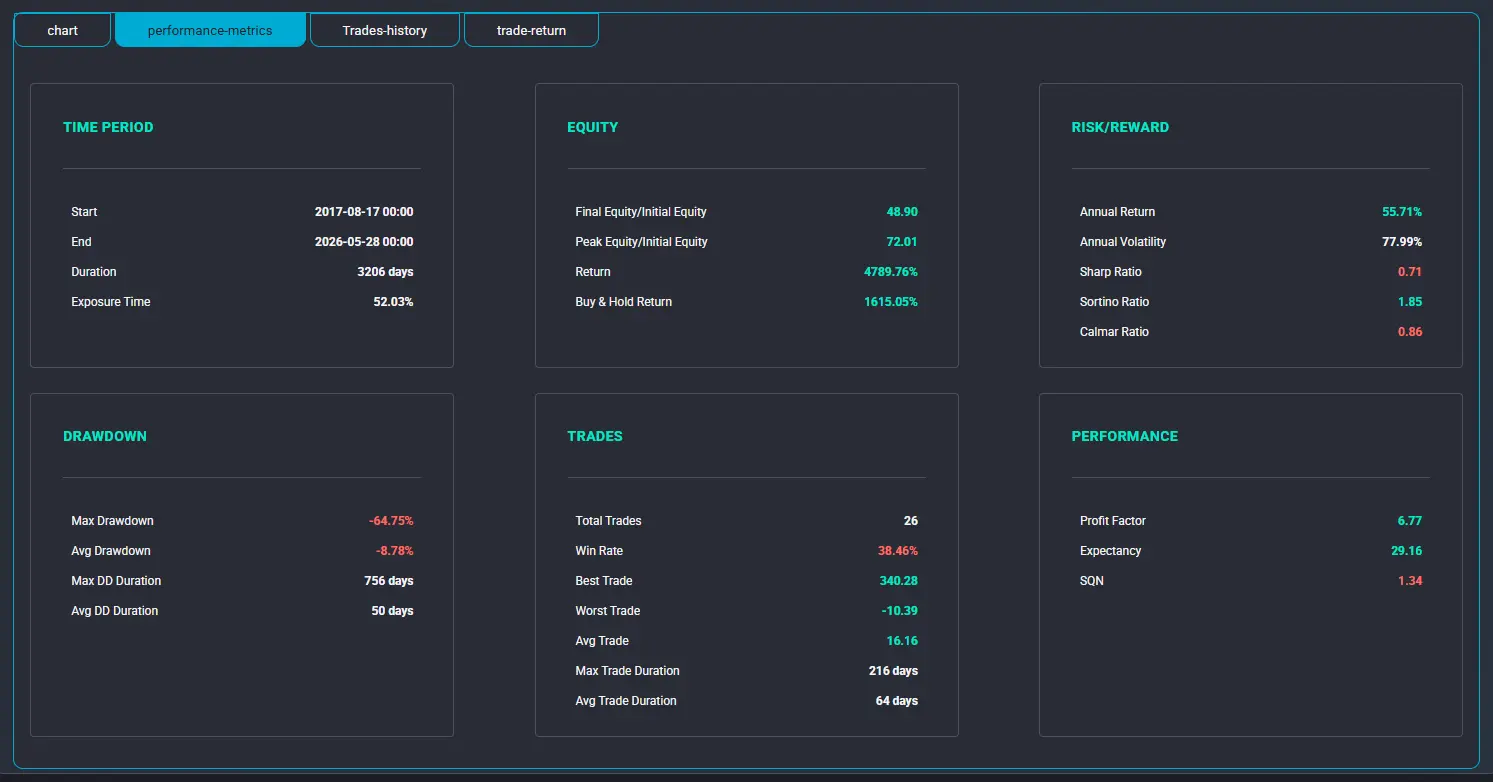
Algotradium with its powerful backtesting capability allows you to test indicator-based or custom-code strategies on years of historical data in less than a minute and receive comprehensive reports on these metrics.
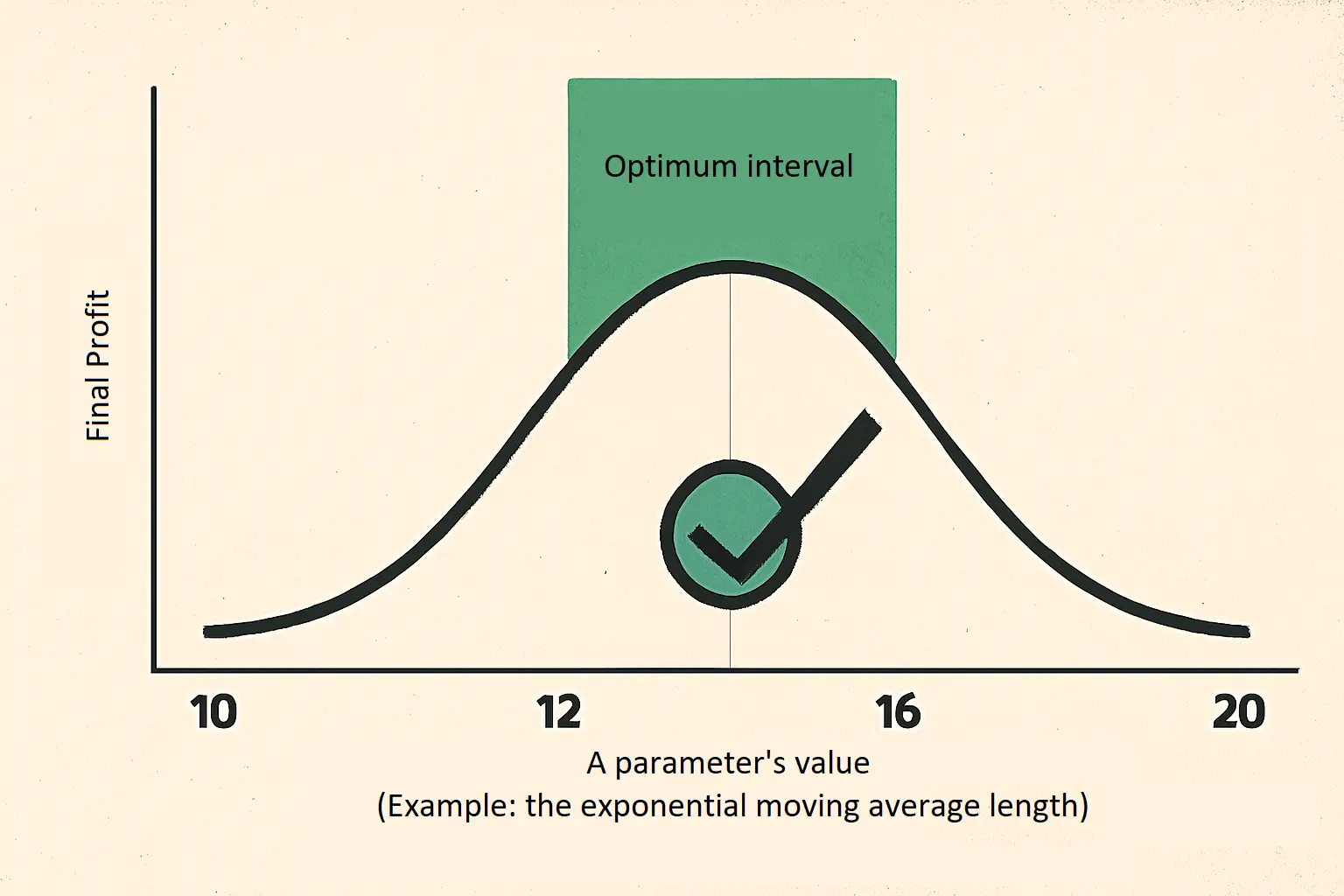
You can also optimize your strategy in a short amount of time. As you know, indicators have different parameters, and changing those parameters changes the indicator value. Sometimes in a specific market and timeframe, a particular set of parameters yields the best results, while using other parameters or even default indicator parameters turns the strategy into a losing one. In Algotradium, you can change your strategy’s parameters, backtest again, and ultimately choose the parameters that perform best for your market and symbol.
Now your strategy is designed and tested. It’s time to execute.
The biggest challenge at this stage is your “emotions.” After two consecutive losses, you might be tempted to ignore the rules and make an emotional trade. Or after a big win, you might get greedy and change your take profit. See your strategy as a “law.” You are the judge, not the lawmaker.
Building a profitable trading strategy doesn’t happen overnight. It’s a continuous process of learning, testing, executing, and improving. This path is not easy, but for those who follow it persistently and systematically, it can be very rewarding.
By following these 7 steps, you will get ahead of most amateur traders who wander aimlessly in the markets. You have a clear framework. You know what you’re doing and why.
A strategy that worked excellently in 2022 may lose its effectiveness in 2024. You should regularly review your strategy’s performance (e.g., every 6 months).
Is it still profitable? Has its drawdown increased? Have market conditions changed?
Based on these reviews, you may need minor “optimization,” such as changing an indicator’s time period.
Be careful! Over-optimization (overfitting) makes your strategy perform excellently only on past data and fail in the future. We will provide strategies to prevent overfitting in future articles.
Building a profitable trading strategy doesn’t happen overnight. It’s a continuous process of learning, testing, executing, and improving. This path is not easy, but for those who follow it persistently and systematically, it can be very rewarding.
By following these 7 steps, you will get ahead of most amateur traders who wander aimlessly in the markets. You have a clear framework. You know what you’re doing and why.
Start now. Design and backtest your first simple strategy in Algotradium today. Take the first step.